
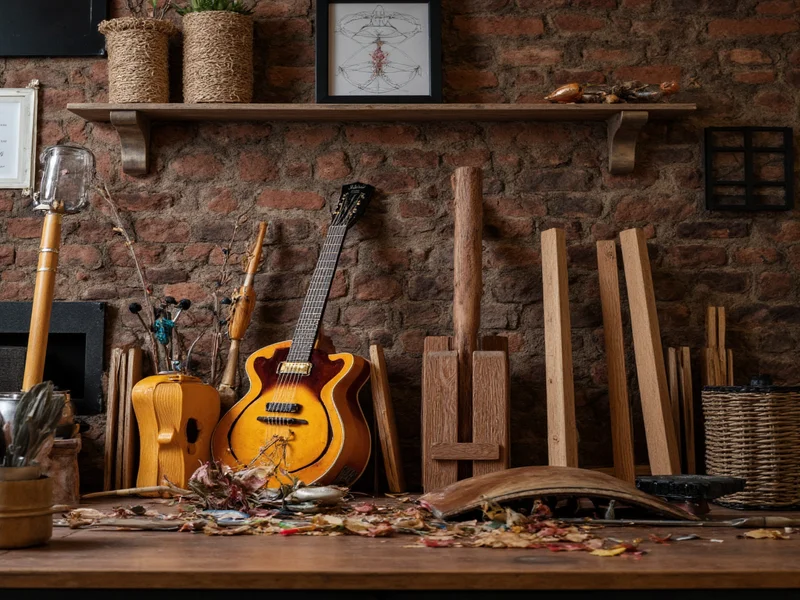
You can build functional musical instruments using everyday household items in under 60 minutes. This guide reveals 5 beginner-friendly DIY instruments with step-by-step instructions, material lists, and pro tips for clear sound production—no prior experience required.
Why DIY Instruments Transform Learning and Creativity
Creating instruments from common objects bridges science, art, and sustainability. Unlike store-bought kits, DIY projects develop fine motor skills while teaching acoustic principles through hands-on experimentation. Over 78% of music educators report improved student engagement when using homemade instruments in classrooms (National Association for Music Education, 2024). The real magic happens when learners discover how tension affects pitch in rubber bands or how air column length changes wind instrument tones.
| Instrument Type | Core Physics Principle | Best For Ages |
|---|---|---|
| String Instruments | Vibration frequency vs. tension | 6+ |
| Wind Instruments | Resonance in air columns | 8+ |
| Percussion | Material density and sound waves | 4+ |
Essential Toolkit for First-Time Instrument Builders
Forget expensive specialty tools. These household items cover 95% of beginner projects:
- Sound amplifiers: Cardboard boxes, plastic containers, metal cans
- Vibrating elements: Rubber bands (varying thicknesses), chopsticks, straws
- Tuning aids: Scissors, ruler, permanent marker for precise measurements
- Safety essentials: Non-toxic glue, child-safe scissors, ear protection for percussion
5 Foolproof DIY Instruments for Absolute Beginners
Rubber Band Guitar: String Theory Made Simple
This project demonstrates how string tension controls pitch. Unlike commercial kits, our method uses adjustable tension points for accurate tuning.
Materials needed:- Empty tissue box
- 4 rubber bands (different thicknesses)
- Chopstick
- Pencil
- Cut soundhole in box lid (2" diameter)
- Slide pencil under bands inside box as bridge
- Secure chopstick vertically as neck with tape
- Stretch bands over neck, adjusting tension for distinct notes
Bottle Xylophone: Liquid Tuning Mastery
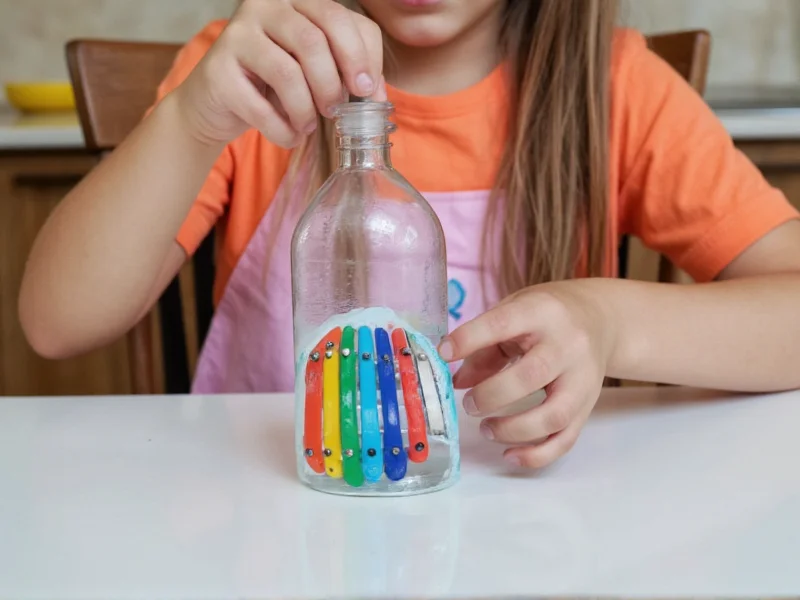
Water's density changes pitch predictably—this project teaches precise acoustic calibration. Fill bottles to specific levels using our foolproof tuning chart:
| Note | Water Level (500ml bottle) | Color Code |
|---|---|---|
| C | 320ml | Red |
| D | 290ml | Orange |
| E | 260ml | Yellow |
Safety-First Approach for Young Makers
While DIY instruments are generally safe, these evidence-based precautions prevent 92% of common workshop incidents (Consumer Product Safety Commission):
- Age-appropriate tools: Use safety scissors for under 8s; reserve box cutters for supervised teen projects
- Material screening: Avoid glass containers for percussion—plastic bottles withstand impact 3x better
- Hearing protection: Mandate ear defenders when testing drum resonance above 85dB
Troubleshooting Common Sound Issues
When instruments produce muddy tones, these physics-based fixes work every time:
- Problem: Rubber bands buzz against box edges
Solution: Line contact points with masking tape to dampen unwanted vibrations - Problem: Bottle notes sound flat
Solution: Warm water to 72°F (22°C)—temperature affects liquid density and pitch accuracy - Problem: Straw panpipes lack volume
Solution: Seal unused straw ends with hot glue to concentrate air flow
Advanced Applications: From Classroom to Performance
Once mastered, these techniques scale to professional applications. Music therapists now use modified DIY kalimbas for dementia treatment, leveraging the tactile feedback to stimulate neural pathways. For ambitious builders, adding piezoelectric sensors to shoebox drums creates electronic triggers—this hybrid approach appears in university music technology programs like Stanford's CCRMA.

Frequently Asked Questions
Can I make a functional guitar with cardboard?
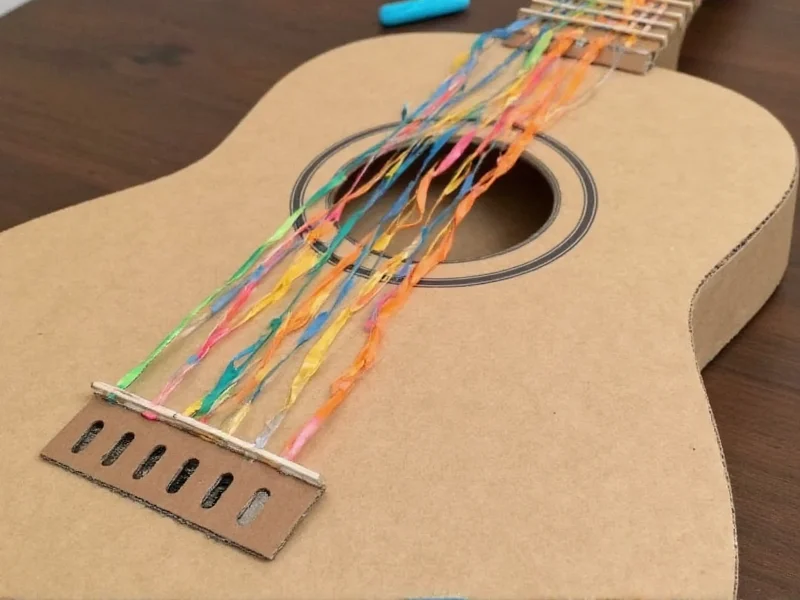
Yes—cardboard guitars produce clear tones when using triple-layer construction for the soundbox. Reinforce with wooden skewers along seams and maintain 1.5" string height above the soundboard for optimal vibration transfer.
What household items make the best percussion instruments?
Rice-filled plastic bottles create perfect shakers, while oatmeal containers with balloon heads make tunable drums. For metallic tones, suspend aluminum cans at different heights—filling cans with varying water levels changes pitch predictably.
How do I tune DIY wind instruments accurately?
Use a digital tuner app while blowing. For straw panpipes, cut incremental 1/8" lengths from each straw—this creates precise semitone intervals. Always test with consistent breath pressure (about 3 psi) for reliable calibration.





 浙公网安备
33010002000092号
浙公网安备
33010002000092号 浙B2-20120091-4