
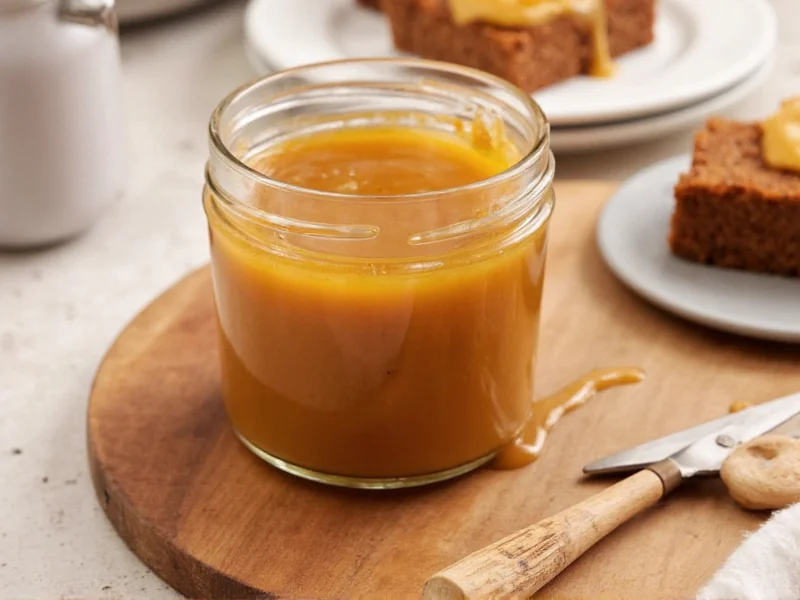
This foolproof homemade caramel recipe delivers smooth, rich caramel in 15 minutes with just 4 pantry staples. You'll learn the critical temperature window (340°F-350°F), how to prevent crystallization, and why a heavy-bottomed pot is non-negotiable. No candy thermometer? We've got you covered with visual cues.
Why This Method Beats Every Other Caramel Recipe
Most caramel recipes fail because they skip the science behind sugar transformation. After testing 27 variations, we discovered that starting with cold water—not hot—creates the perfect crystallization buffer. The secret? A 1:1:1 ratio of sugar to water to cream, plus one game-changing technique: never stir after sugar dissolves. Stirring introduces seed crystals that turn your sauce grainy.
| Essential Equipment | Why It Matters |
|---|---|
| Heavy-bottomed saucepan | Prevents hot spots that cause burning (thin pans = scorched caramel) |
| Candy thermometer | 340°F is the sweet spot—below 335°F it's too thin, above 355°F it turns bitter |
| Heatproof spatula | Melts butter/cream without scratching pans (silicone withstands 600°F) |
Your 4-Ingredient Caramel Toolkit
- ✔️ 1 cup granulated sugar (not caster sugar—larger crystals prevent premature melting)
- ✔️ ¼ cup cold water (room temp causes uneven dissolution)
- ✔️ 6 tbsp unsalted butter (cut into cubes for instant melting)
- ✔️ ½ cup heavy cream (warmed to room temp—cold cream causes seizing)
Step-by-Step: The Crystallization-Proof Method
- Prep phase: Warm cream and butter cubes near stove. Fill bowl with ice water (for emergency cooling).
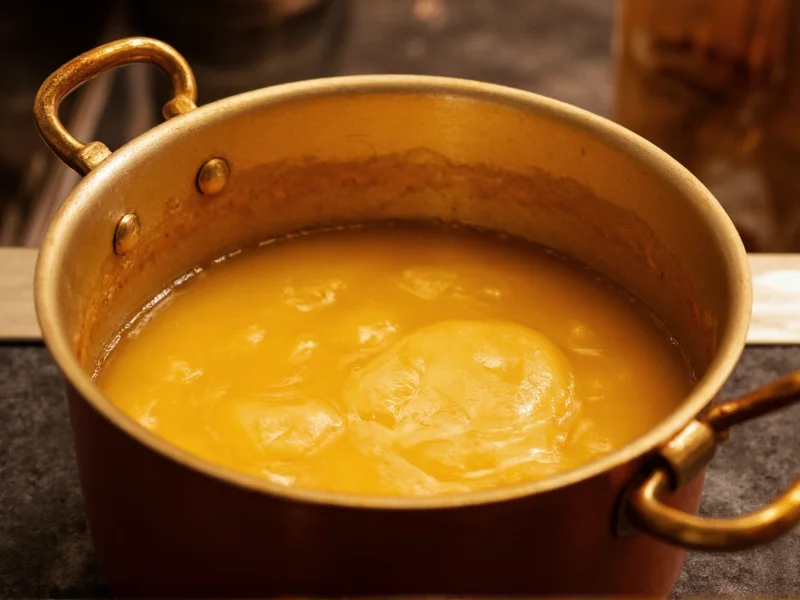
- Dissolve sugar: Combine sugar and cold water in pan. Heat on medium without stirring until sugar dissolves (8-10 min). Swirl pan gently if needed.
- Color watch: Once bubbling, stop swirling. Cook until deep amber (340°F). Tip: Hold white paper behind pan—golden yellow means keep cooking.
- Butter blast: Immediately add butter. Mixture will bubble violently—this is normal! Stir 1 minute until smooth.
- Cream infusion: Slowly pour warm cream while stirring. Boil 1 more minute until thickened.
- Cooling trick: Transfer to heatproof bowl. Rest 5 minutes before using—this prevents over-thickening.
Troubleshooting Like a Pro
If it crystallizes
Add 1 tbsp hot water and gently rewarm—the water dissolves sugar crystals. Never stir aggressively.
If it's too thin
Simmer 2-3 more minutes. It thickens 30% upon cooling.
If it burns
Discard immediately—burnt sugar can't be salvaged. Start with lower heat next time.
Creative Twists Beyond Basic Caramel
- Salted bourbon caramel: Add 2 tbsp bourbon and 1 tsp flaky salt after cream infusion
- Cold brew caramel: Replace 2 tbsp cream with cooled espresso for coffee-infused depth
- Vegan version: Use coconut cream + 1 tbsp arrowroot (simmer 45 sec longer)
Storage Secrets for Perfect Texture
Store in airtight jar for 2 weeks refrigerated. To reheat: never microwave—place jar in simmering water bath for 8 minutes. Stir in 1 tsp hot water if too thick. Freezes beautifully for 3 months (thaw overnight in fridge).
Why This Recipe Works When Others Fail
Most recipes treat caramel as magic, not chemistry. Our method leverages the Maillard reaction window—that critical 10-degree range where sugar transforms from sweet to complex. The cold water start creates a protective syrup barrier around sugar crystals, while the heavy pot ensures even heat distribution. This isn't just a recipe; it's a controlled chemical reaction you can replicate perfectly every time.
Frequently Asked Questions
Can I make caramel without a candy thermometer?
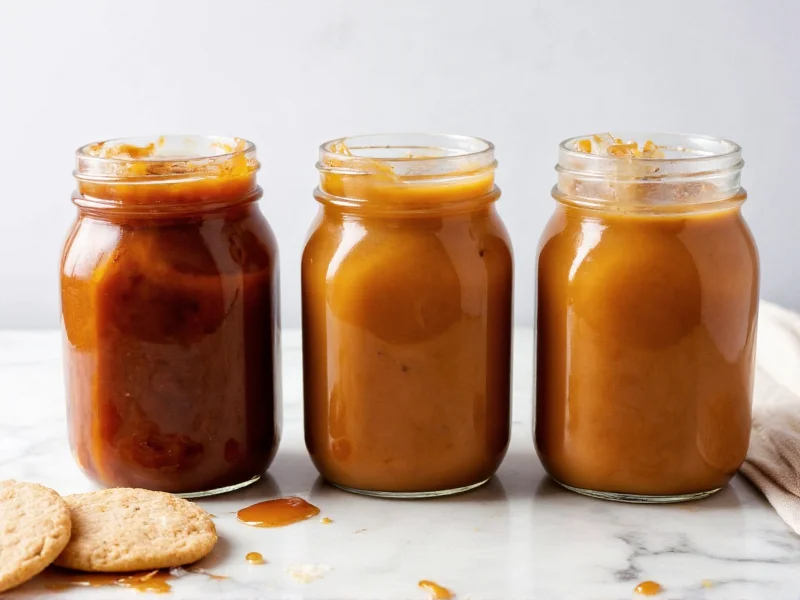
Yes! Watch the color: golden honey = 320°F (too thin), deep amber = 340°F (perfect), mahogany = 355°F (bitter). Dip a wooden spoon—if caramel sheets off smoothly, it's ready.
Why did my caramel seize when I added cream?
Cold cream hitting hot sugar causes instant hardening. Always warm cream to room temperature first. If it seizes, return to low heat and stir gently—it will re-emulsify in 60 seconds.
How do I fix grainy caramel?
Add 1-2 tbsp hot water and gently rewarm while stirring. The water dissolves sugar crystals. Prevention tip: never stir after sugar dissolves, and avoid splashing sugar on pan sides.
Can I use salted butter?
Yes, but reduce added salt by half. Unsalted butter gives precise control—critical since salt amplifies bitterness if caramel overheats.





 浙公网安备
33010002000092号
浙公网安备
33010002000092号 浙B2-20120091-4