
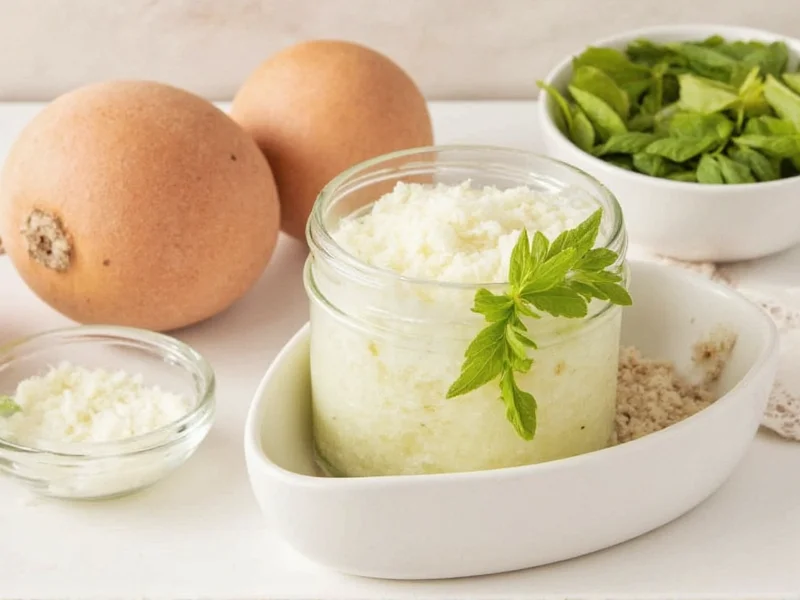
Why Proper Facial Exfoliation Matters for Healthy Skin
Exfoliating your face at home with natural ingredients isn't just a beauty trend—it's a science-backed skincare practice. When done correctly, homemade exfoliation removes dead skin cells that accumulate every 28-30 days, revealing brighter skin underneath. Unlike harsh commercial scrubs that can cause micro-tears, gentle DIY methods support your skin's natural renewal process while avoiding unnecessary chemicals.
Skin Type Assessment: Your First Step to Safe Exfoliation
Before choosing any exfoliation method, identify your skin type. Using the wrong technique can cause irritation, redness, or worsen existing conditions. This simple assessment prevents common DIY skincare mistakes:
| Skin Type | Characteristics | Exfoliation Frequency |
|---|---|---|
| Oily | Shiny appearance, larger pores, prone to blackheads | 2 times weekly |
| Dry | Flakiness, tightness, visible fine lines | Once weekly |
| Combination | Oily T-zone, normal/dry cheeks | 1-2 times weekly |
| Sensitive | Redness, stinging, reacts to products | Every 10-14 days |
Critical Safety Guidelines for Homemade Facial Exfoliation
Many DIY skincare tutorials overlook crucial safety considerations. Protect your skin barrier with these evidence-based precautions:
- Avoid nut-based scrubs if you have sensitive skin or rosacea—particle size matters more than ingredient
- Never use citrus directly on skin before sun exposure—natural AHAs increase photosensitivity
- Limit scrubbing time to 30 seconds maximum—over-exfoliation damages skin barrier
- Always patch test new ingredients behind your ear 24 hours before facial application
- Discontinue immediately if you experience burning, redness, or stinging
Three Dermatologist-Approved Homemade Exfoliation Methods
Gentle Oatmeal Soothing Scrub (Sensitive Skin)
This enzymatic exfoliator works through natural saponins in oats without physical abrasion:
- 2 tablespoons finely ground oatmeal (blended to powder)
- 1 tablespoon plain yogurt (contains lactic acid)
- 1 teaspoon honey (natural humectant)
Method: Mix ingredients into paste. Apply to damp skin using circular motions for 20 seconds. Rinse with cool water. Use every 10-14 days.
Balancing Rice Flour Polish (Combination Skin)
Rice water has been used in Asian skincare for centuries to brighten and refine texture:
- 1 tablespoon rice flour (finely milled)
- 1 teaspoon aloe vera gel
- 5 drops rose water
Method: Create smooth paste. Massage onto T-zone for 15 seconds, cheeks for 10 seconds. Rinse thoroughly. Use once weekly.

Nourishing Honey-Sugar Scrub (Normal to Dry Skin)
Raw honey's enzymes combined with fine sugar provide dual-action exfoliation:
- 1 tablespoon raw honey (not processed)
- 1 teaspoon superfine sugar (or brown sugar)
- 3 drops jojoba oil (mimics skin's sebum)
Method: Mix gently. Apply to clean face, focusing on rough areas. Rinse after 30 seconds. Follow with moisturizer. Use once weekly.
Post-Exfoliation Skincare Protocol
What you do after exfoliating determines whether you'll see benefits or irritation. Follow this evidence-based recovery sequence:
- Rinse with cool water to soothe skin and close pores
- Apply hydrating toner with ingredients like witch hazel or green tea
- Wait 15 minutes before applying next products (allows skin barrier recovery)
- Apply barrier-repair moisturizer with ceramides or squalane
- Always finish with SPF 30+—exfoliated skin is more sun-sensitive
When to Avoid Homemade Facial Exfoliation
Certain conditions require skipping exfoliation entirely. Consult a dermatologist if you have:
- Active acne breakouts or inflamed cysts
- Recent sunburn or skin peeling
- Open wounds, cuts, or skin infections
- Conditions like eczema or psoriasis flare-ups
- Within 7 days of professional chemical peels
Frequently Asked Questions
Can I use coffee grounds to exfoliate my face?
Coffee grounds are too coarse for facial skin and create jagged edges that cause micro-tears. For physical exfoliation, use finely ground ingredients like rice flour or oatmeal instead. Coffee's benefits are better utilized in body scrubs where skin is thicker.
How soon will I see results from homemade exfoliation?
Most people notice immediate brightness after first use, but significant texture improvement takes 4-6 weeks of consistent, proper exfoliation. Over-exfoliating trying to speed results damages your skin barrier and causes more harm than good. Patience yields better long-term results.
Is baking soda safe for homemade facial exfoliation?
No, baking soda has a high pH (9) that disrupts your skin's natural acidic barrier (pH 5.5). This imbalance leads to increased sensitivity, dryness, and bacterial growth. Dermatologists consistently advise against using baking soda on facial skin due to these damaging effects.
Can I make a homemade chemical exfoliant?
True chemical exfoliants (AHAs/BHAs) require precise pH balancing and concentrations that aren't safely replicable at home. Natural alternatives like diluted apple cider vinegar (pH 3) can provide mild exfoliation but must be used cautiously—never undiluted, and only for non-sensitive skin types once weekly.





 浙公网安备
33010002000092号
浙公网安备
33010002000092号 浙B2-20120091-4