
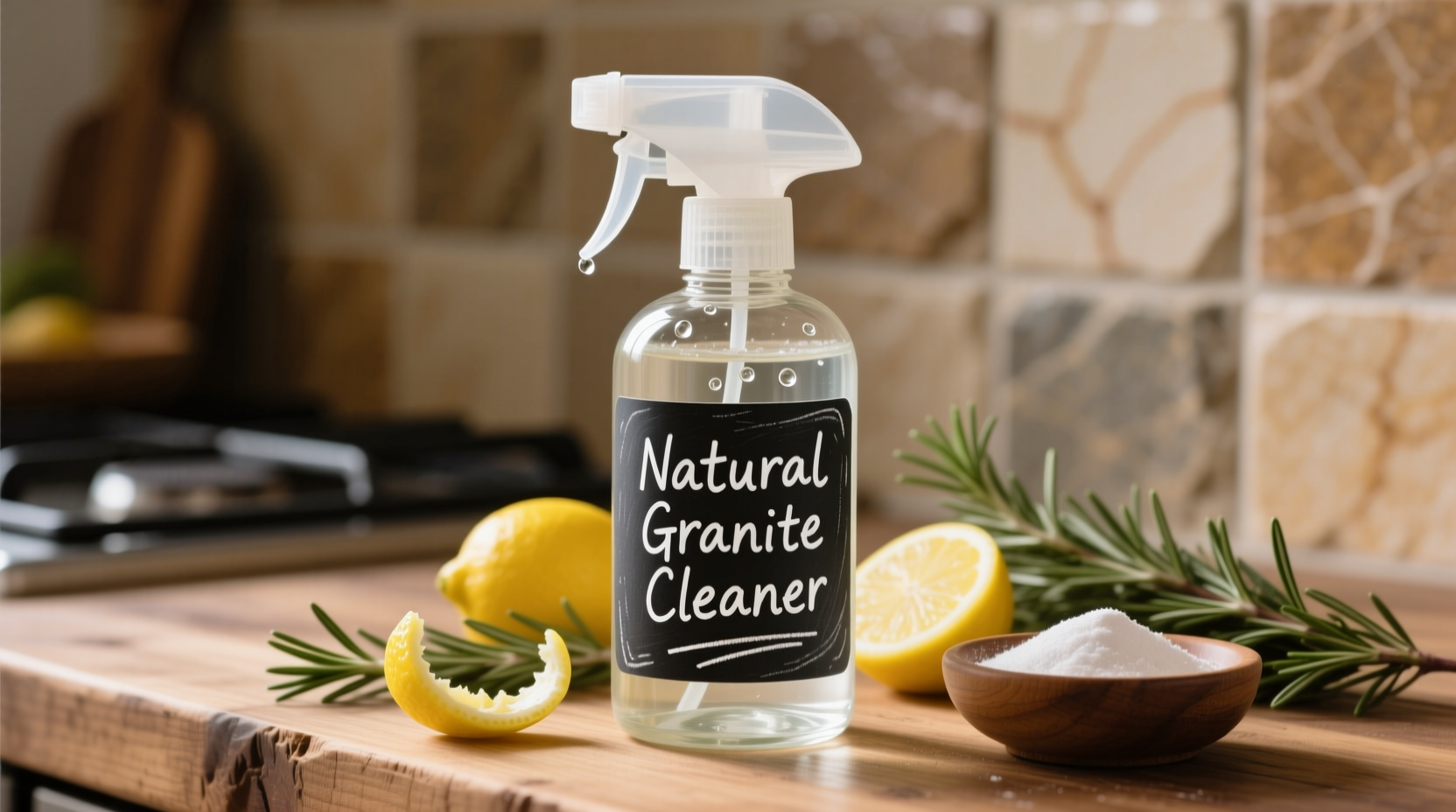
Granite countertops enhance any kitchen, but improper cleaning can cause irreversible damage. Most commercial cleaners contain harsh chemicals that degrade granite's protective sealant over time. This guide reveals scientifically-backed homemade solutions that clean effectively while preserving your investment. You'll learn exactly which ingredients work, why common "natural" cleaners like vinegar actually harm granite, and step-by-step methods professionals use to maintain stone surfaces.
Why Most Homemade Cleaners Damage Granite
Granite isn't completely solid—it's slightly porous and requires specific pH balance for safe cleaning. Understanding these properties prevents costly mistakes:
Granite's Vulnerability Explained
- pH sensitivity: Granite etches when exposed to solutions below pH 5 (acidic) or above pH 9 (alkaline)
- Porosity factor: Unsealed granite absorbs liquids within 15-30 minutes, causing stains
- Sealant degradation: Harsh chemicals break down protective sealants, requiring more frequent resealing

3 Proven Homemade Granite Cleaner Formulas
These recipes use readily available ingredients with scientifically appropriate pH levels. Each serves different cleaning needs while protecting your stone.
Daily Cleaning Spray (pH 7-8)
Ideal for routine maintenance after food preparation
- 1 cup distilled water (prevents mineral deposits)
- 1/2 cup 91% isopropyl alcohol (evaporates completely)
- 2-3 drops pH-neutral dish soap (like Dawn Free & Clear)
- 5 drops essential oil (optional for scent)
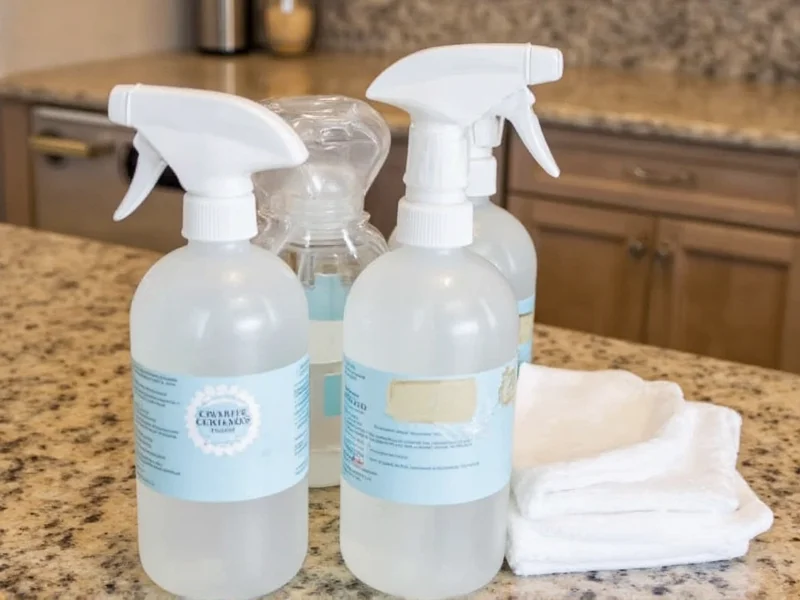
Instructions: Combine in spray bottle. Shake gently before use. Spray on surface, wipe with microfiber cloth, then buff dry.
Stain Removal Paste (For Oil Stains)
Effective for stubborn cooking oil or grease marks
- 1/4 cup baking soda (mild abrasive)
- 2 tablespoons hydrogen peroxide (3% solution)
- 1 teaspoon water
Instructions: Mix to form paste. Apply to stain, cover with plastic wrap, wait 24-48 hours. Wipe clean and rinse thoroughly.
Quick Shine Booster
Restores luster between deep cleanings
- 1/2 cup distilled water
- 1/4 cup rubbing alcohol
- 1 teaspoon olive oil (food-safe)
Instructions: Mix in spray bottle. Mist lightly on surface, buff immediately with dry microfiber cloth.
Step-by-Step Granite Cleaning Protocol
Follow this professional method for optimal results:
- Clear and dry: Remove all items and wipe away crumbs/dry debris
- Preliminary rinse: Dampen surface with distilled water to lift surface particles
- Apply cleaner: Mist solution evenly (don't soak)
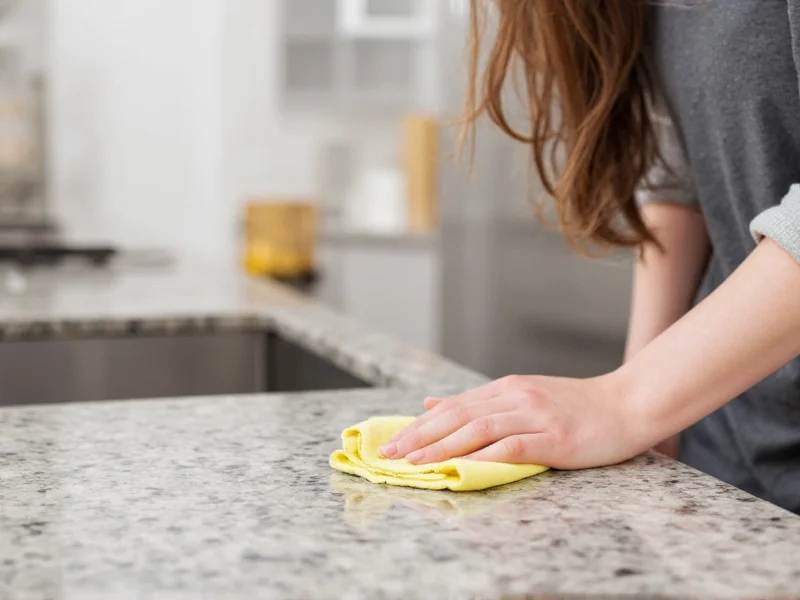
- Gentle wiping: Use microfiber cloth in circular motions for 30 seconds
- Rinse: Wipe with clean, damp cloth to remove residue
- Dry thoroughly: Buff with dry microfiber cloth to prevent water spots
- Weekly treatment: Apply mineral oil to maintain sealant between professional sealings
Dangerous Ingredients to Avoid
Certain "natural" cleaners cause permanent damage. These substances react with granite's calcium content:
| Ingredient | Damage Caused | Visible Effect |
|---|---|---|
| Vinegar, lemon juice | Etching (surface corrosion) | Dull spots that feel rough |
| Bleach | Sealant degradation | Increased staining over time |
| Ammonia | Color fading | Discolored patches |
| Abrasive cleaners | Micro-scratches | Loss of polish, visible streaks |
Long-Term Granite Maintenance Schedule
Preserve your investment with this professional care routine:
- Daily: Clean with pH-neutral spray after food preparation
- Weekly: Apply mineral oil treatment to maintain sealant
- Monthly: Check sealant by sprinkling water—if it darkens stone, reseal
- Every 6-12 months: Professional sealing (frequency depends on usage)
- Immediately: Wipe spills of wine, oil, or acidic substances
Frequently Asked Questions
Can I use baking soda on granite for tough stains?
Yes, but only in paste form for spot treatment. Mix baking soda with hydrogen peroxide to create a thick paste, apply to stain, cover with plastic wrap, and leave for 24-48 hours. Baking soda's mild abrasiveness helps lift stains without damaging properly sealed granite when used correctly.
How often should I reseal granite countertops?
Test your sealant monthly by sprinkling water on the surface. If water darkens the stone instead of beading up, it's time to reseal. Most homes need resealing every 6-12 months depending on usage. High-traffic kitchens typically require more frequent sealing than secondary bathrooms.
Is hydrogen peroxide safe for granite cleaning?
Yes, 3% hydrogen peroxide is safe when properly diluted. It's effective for organic stains like wine or food without damaging sealant. Never mix with vinegar or ammonia, and always rinse thoroughly after use. For regular cleaning, stick to the alcohol-based solution; reserve hydrogen peroxide for occasional stain treatment.
What's the best cloth for cleaning granite?
High-quality microfiber cloths are ideal—they trap particles without scratching. Avoid paper towels which can leave lint, and never use abrasive scrubbers. Have separate cloths for initial cleaning and final buffing. Wash microfiber regularly with fragrance-free detergent to prevent residue buildup that could affect your stone.





 浙公网安备
33010002000092号
浙公网安备
33010002000092号 浙B2-20120091-4