
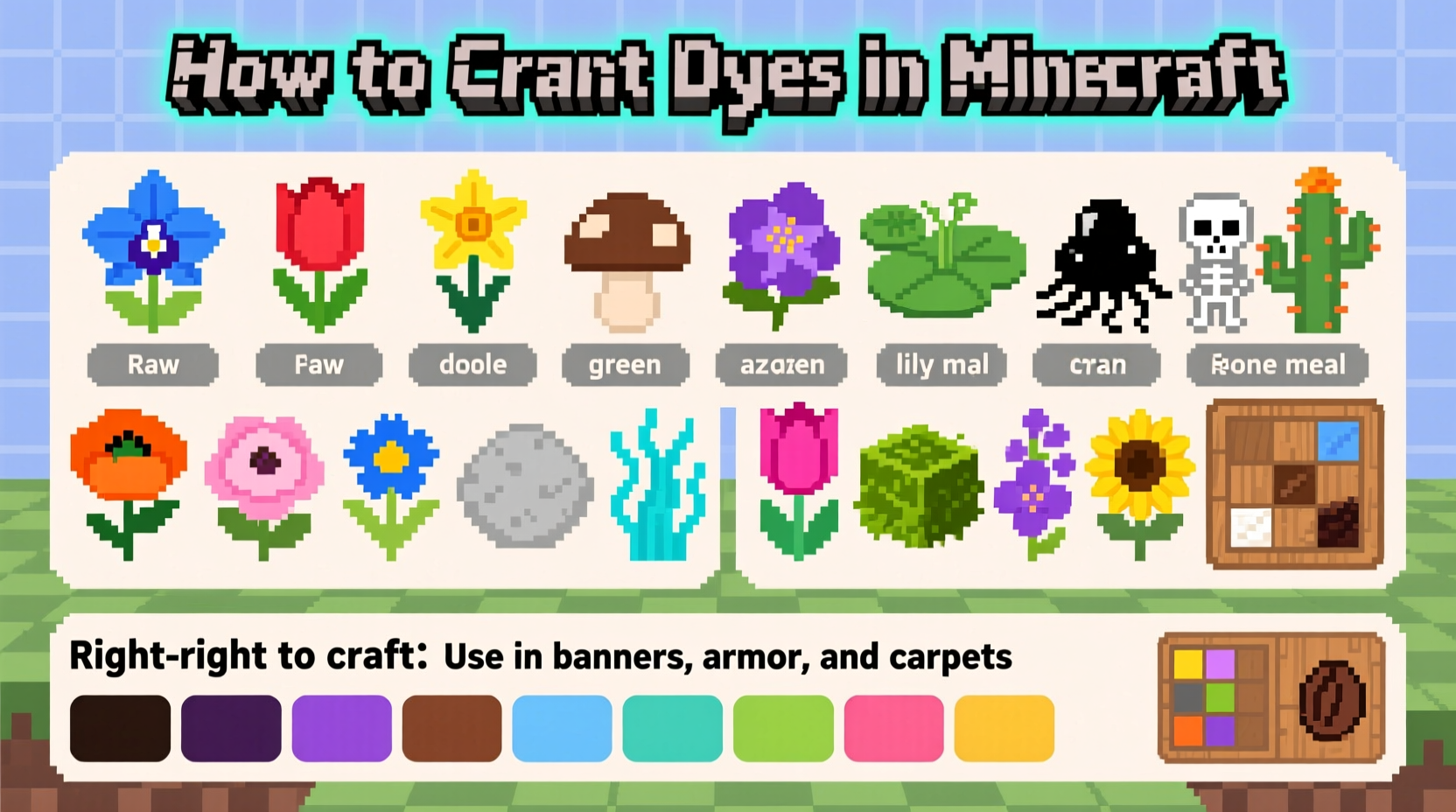
Mastering dyes in Minecraft transforms your building experience, allowing for detailed customization of wool, terracotta, banners, and more. This complete guide reveals every dye recipe across Java and Bedrock editions, plus efficient farming techniques and creative applications you won't find in basic tutorials.
Understanding Minecraft's Dye System
Dyes serve as the foundation for color customization in Minecraft. Unlike real-world pigments, Minecraft dyes function as single-use coloring agents that can be applied to various materials. The game features 16 distinct colors, each obtainable through crafting, farming, or exploration.
Core Dye Mechanics You Need to Know
- One dye colors 8 wool blocks or 8 terracotta blocks
- Dyes can be combined to create new colors (more on this later)
- Some dyes have multiple acquisition methods
- Version differences exist between Java and Bedrock editions
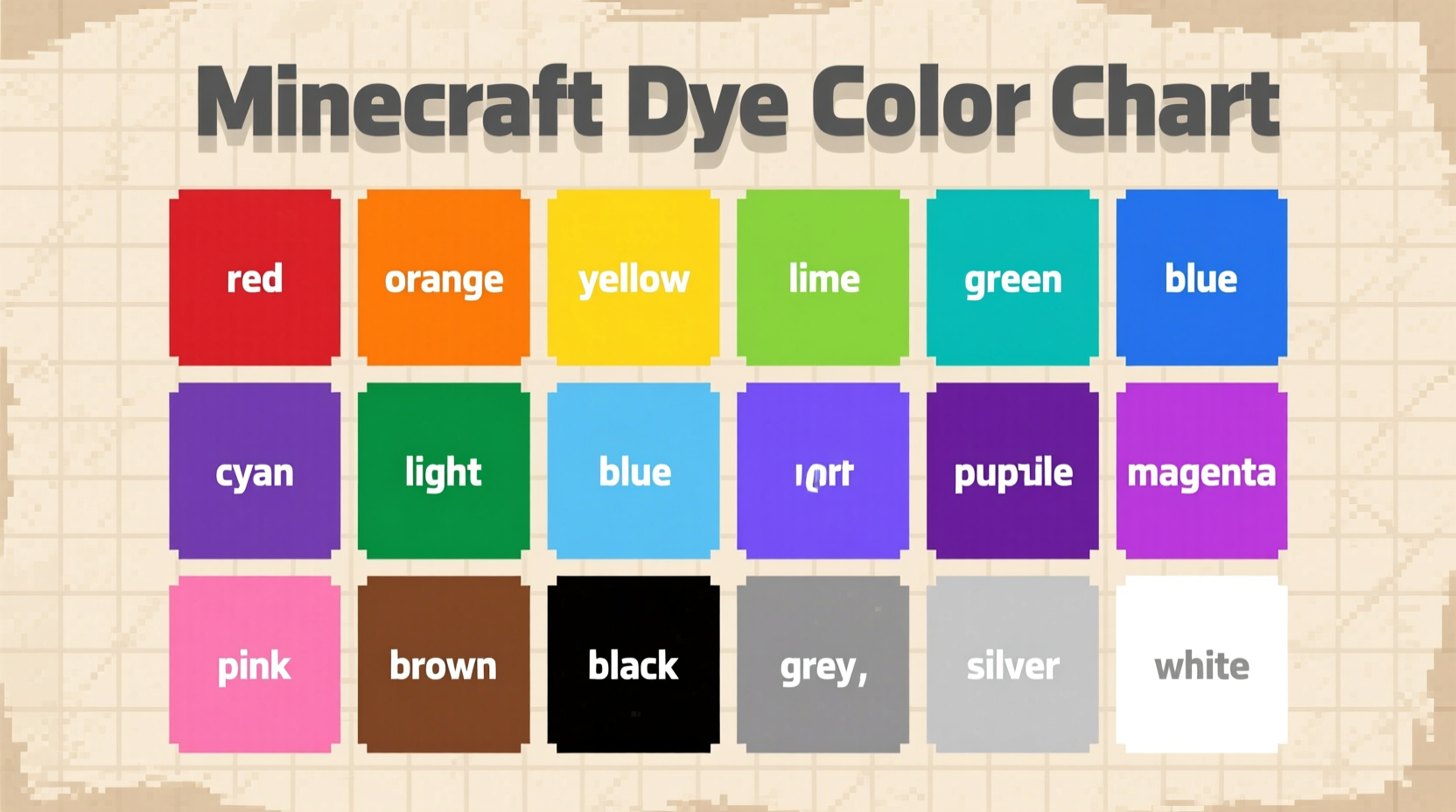
Complete Dye Reference Guide
Below is your essential reference for every dye color, including primary crafting recipes and alternative sources. Each entry follows the same format for quick scanning.
White Dye
Orange Dye
Magenta Dye
Light Blue Dye
Yellow Dye
Lime Dye
Pink Dye
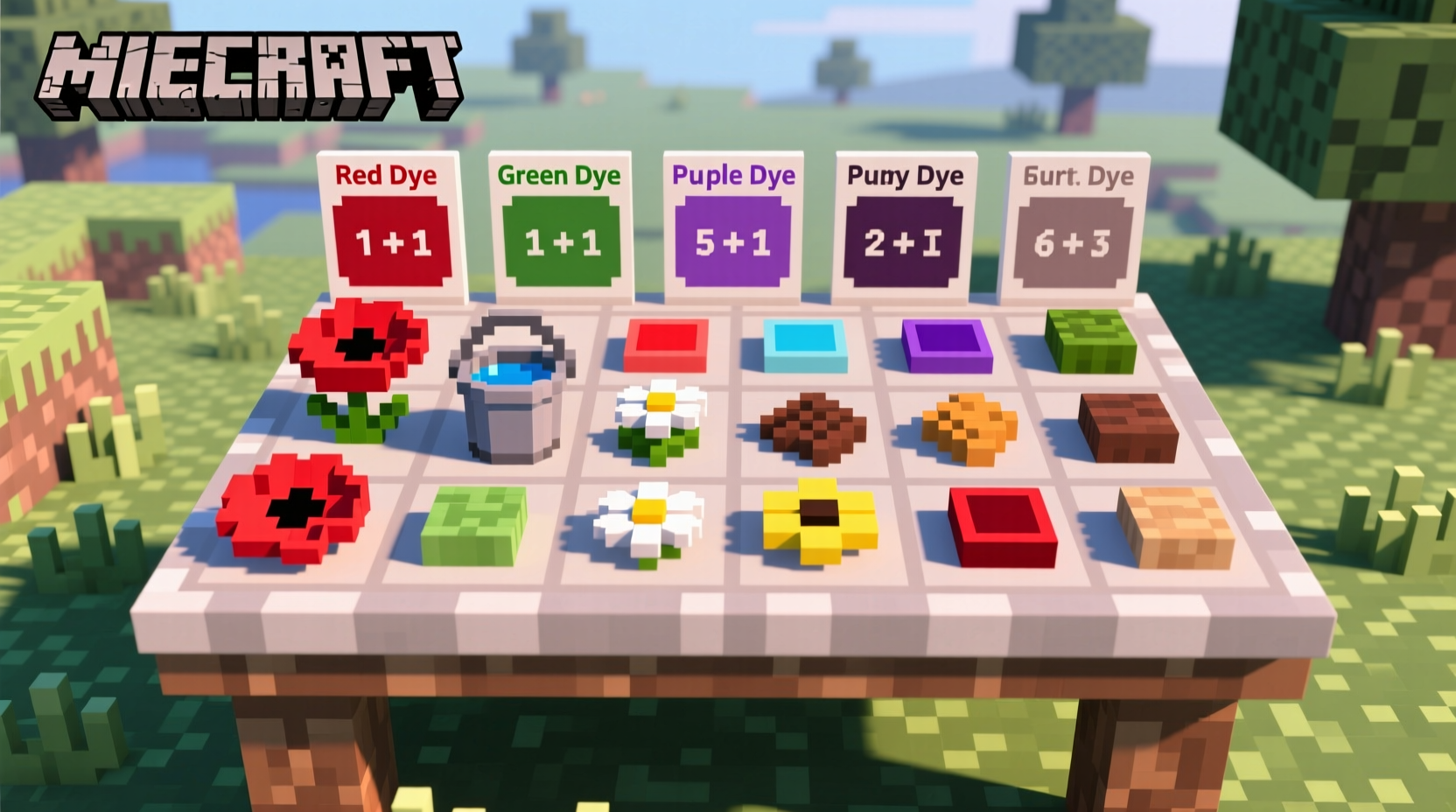
Advanced Dye Techniques
Once you've mastered basic dye creation, these advanced techniques will elevate your building projects:
Color Mixing Guide
| Mix These Colors | Creates | Best For |
|---|---|---|
| Red + Yellow | Orange | Sunset-themed builds |
| Blue + Red | Purple | Mystical structures |
| Red + White | Pink | Decorative accents |
| Green + White | Lime | Nature integration |
Efficient Dye Farming Systems
Create sustainable dye sources with these farming setups:
- Universal Flower Farm: Design a biome-based farm with water channels for automatic collection
- Cactus Green Dye: Build a cactus farm with hoppers for continuous green dye production
- Bone Meal Generator: Create a skeleton spawner farm for unlimited white dye
Troubleshooting Common Dye Issues
Encountering problems with your dye projects? These solutions address frequent challenges:
Why Won't My Recipe Work?
Check these common issues:
- Verify you're using the correct edition (Java vs. Bedrock have slight differences)
- Ensure your crafting grid layout matches the recipe exactly
- Confirm you have the latest game version (1.20+)
- Some dyes require specific biome conditions to find naturally
Practical Building Applications
Dyes aren't just for coloring wool—they enhance multiple building elements:
- Banners: Create intricate patterns for decoration and identification
- Stained Glass: Design beautiful windows that maintain visibility
- Concrete: Build durable, colorful structures that won't burn
- Firework Stars: Customize fireworks for celebrations
FAQ: Minecraft Dye Essentials
Can you make black dye without wither roses?
Yes, black dye can also be obtained by crafting an ink sac with a coal or charcoal. Wither roses are the only natural source, but squid provide renewable ink sacs for crafting black dye without defeating the wither.
What's the fastest way to get multiple dye colors?
Visit a plains biome with a fortune-enchanted hoe to collect multiple tulips and dandelions simultaneously. Flower forests provide the highest concentration of diverse flowers, making them ideal for gathering seven different dye colors in one location.
Do dyes work differently in Minecraft Bedrock Edition?
Most dye recipes are identical between editions, but Bedrock has slight differences in flower availability. For example, oxeye daisies create white dye in Bedrock but aren't used for dyes in Java. Always check edition-specific guides when following complex recipes.
How can I create custom patterns with dyes?
Combine dyes with banners using a loom to create layered designs. Start with a base color, then add patterns like borders, stripes, or symbols. Each additional pattern requires specific dye combinations, allowing for thousands of unique banner designs to personalize your builds.





 浙公网安备
33010002000092号
浙公网安备
33010002000092号 浙B2-20120091-4