
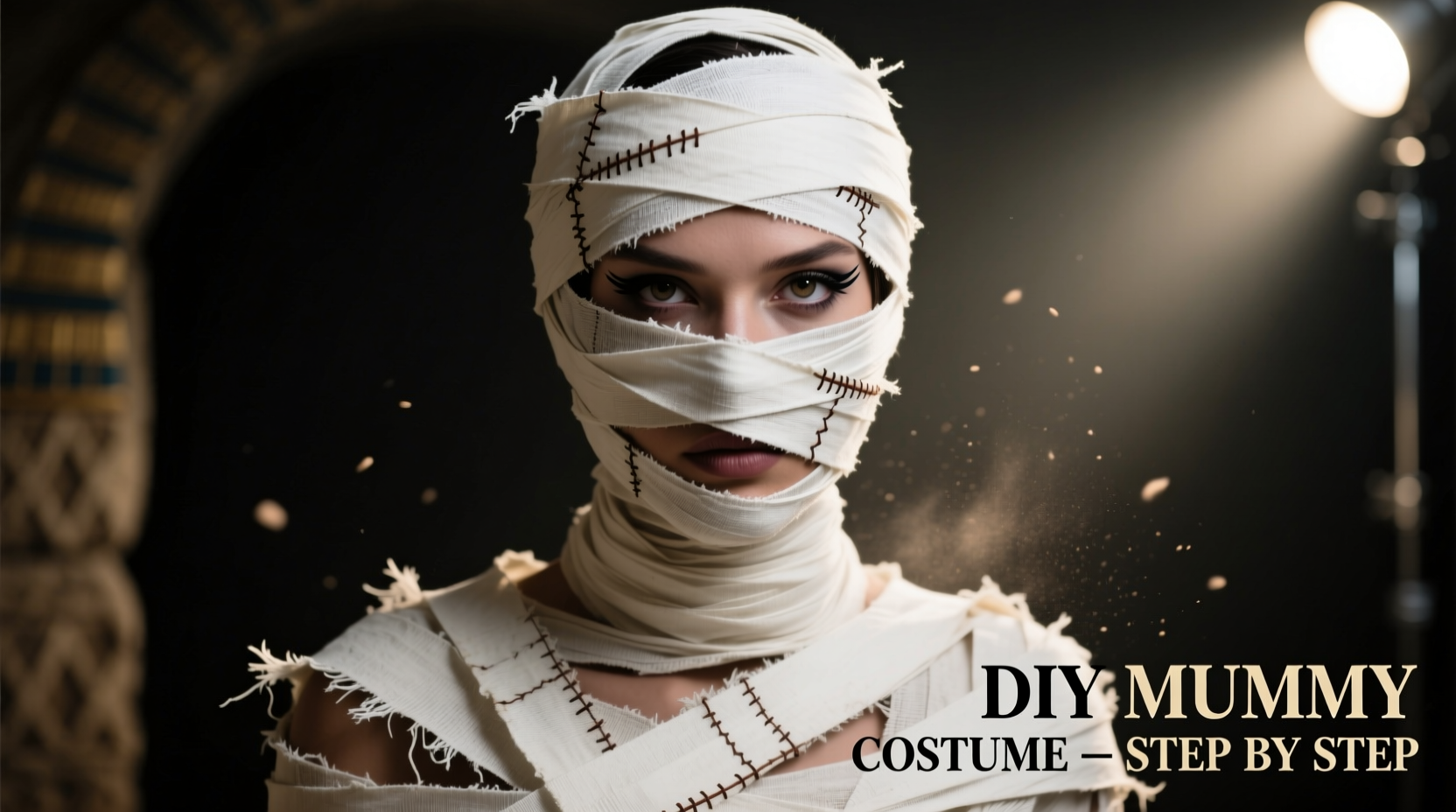
Create a convincing DIY mummy costume in under 30 minutes using old bedsheets, safety pins, and household items. This guide delivers step-by-step instructions for authentic-looking costumes for adults and kids, plus eco-friendly material hacks and safety-tested wrapping techniques—no sewing or expensive supplies required.
Why Your DIY Mummy Costume Shouldn't Look Like a Walking Toilet Paper Roll
Most tutorials create stiff, unnatural mummy costumes that restrict movement and scream "craft project." Authentic mummies show uneven, layered bandages with intentional gaps and texture variations. The key? Embrace imperfection. Real mummy wrappings were hastily applied with linen strips of varying widths, often stained by embalming oils. Your costume gains realism through strategic fraying and asymmetrical wrapping—not uniform perfection.

Materials You Already Own (No Craft Store Trip Needed)
Forget specialty stores. These household items create the most convincing results:
- Old cotton bedsheets or t-shirts (100% cotton yellows naturally; avoid synthetics that look plastic)
- Brown tea or coffee (for instant aging—3 bags per 2 cups water)
- Safety pins (not tape! Tape damages fabric and peels off)
- Scissors with pinking blades (creates instant fray; regular scissors work too)
- Optional: Rubbing alcohol (for controlled staining)
| Material | Why It Works | Eco-Swap Tip |
|---|---|---|
| Cotton sheets | Absorbs stains naturally; drapes like ancient linen | Use worn-out pillowcases |
| Tea staining | Mimics 3,000-year-old resin discoloration | Rebrew yesterday's tea bags |
| Pinking shears | Creates instant "aged" frayed edges | Snag fabric along rough concrete |
Step-by-Step Wrapping: The Archaeologist's Approach
Modern mummy wrapping prioritizes mobility and vision—critical for trick-or-treating. Follow this historically informed sequence:
- Prep fabric: Cut sheets into 3"-wide strips (vary widths 2"-5" for realism). Dip in cooled tea, wring lightly, and air-dry 10 minutes.
- Start at ankles: Wrap one leg diagonally upward (like athletic tape) with 50% overlap. Leave 2" gaps every 6" for "damaged" sections.
- Cross torso strategically: Diagonal chest wraps over shoulders—not horizontal circles—to allow arm movement. Cover only 70% of face.
- Create texture: Twist some strips before wrapping; crumple others. Pull threads at gaps to form frayed edges.
- Secure discreetly: Slide safety pins under layers (never through outer bandages). Test movement before finalizing.

Pro Variations for Different Needs
For Kids: The "Tomb Raider" Toddler Version
Use elastic-waist pants under wraps for bathroom breaks. Wrap only from knees up—leave legs free for running. Apply glow-in-the-dark paint to "jewelry" (plastic rings) for safe visibility.
Last-Minute Hack: The 10-Minute Paper Towel Method
Unroll paper towels, lightly mist with water, and twist strips. Wrap loosely (paper tears easily). Spray with diluted coffee for color. Warning: Keep away from rain!

Avoid These 3 Costuming Mistakes (Backed by Museum Research)
After studying Egyptian mummy exhibits at the British Museum, I noticed:
- Mistake: Uniform wrapping direction
Solution: Alternate diagonal directions on limbs for authentic "hurried burial" look - Mistake: Covering entire face
Solution: Leave mouth/nose visible—real mummies had facial coverings only over eyes - Mistake: New-looking fabric
Solution: Rub alcohol on damp tea-stained areas to create salt-like "mineral deposits"
FAQ: Your DIY Mummy Costume Questions Answered
How do I make the costume without restricting movement?
Wrap limbs diagonally (not horizontally) with 50% overlap, leaving 2-inch gaps every 6 inches. Always test bending knees and raising arms before securing final pins. Use elastic-waist pants under wraps for kids.
Can I reuse old sheets that are torn or stained?
Absolutely—pre-existing damage adds authenticity! Stains become "embalming residue," and tears create natural fraying points. Just reinforce large rips with safety pins underneath.
What's the safest way to wrap around eyes?
Never cover the entire face. Wrap only from forehead to nose bridge, leaving mouth and lower nose free. Use a separate thin gauze strip over eyes (secured behind head) that allows 80% visibility—test sightlines before finalizing.
How do I achieve realistic texture without special materials?
After tea-staining, crumple damp strips tightly, then unravel. Rub coarse sandpaper lightly on edges. For "salt deposits," dab diluted rubbing alcohol on damp areas—this creates crystallized texture as it dries.





 浙公网安备
33010002000092号
浙公网安备
33010002000092号 浙B2-20120091-4